
About
PMD & PMLD
Understanding PMD and PMLD—their similarities, how they differ, and what it means for your family.


What is a leukodystrophy?
PMD and PMLD are both rare genetic conditions that affect how the brain and nerves communicate with the body. They can look very similar, especially early on, with symptoms such as muscle stiffness and weakness, difficulties with coordination and speech, and delayed development.
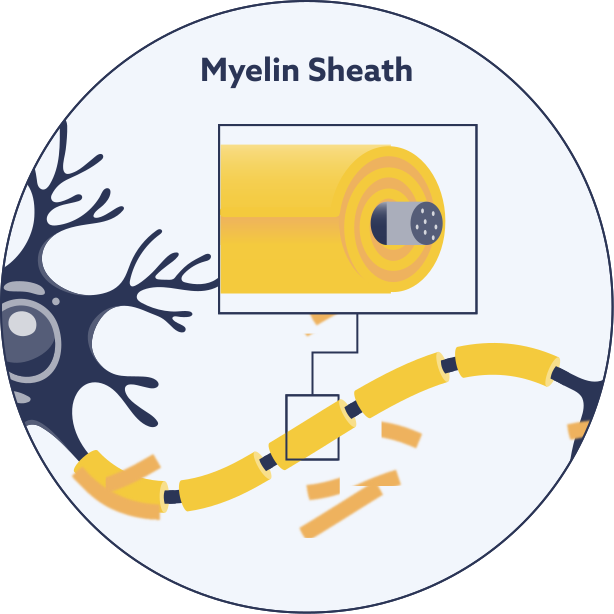
Both PMD and PMLD belong to a group of rare genetic disorders called leukodystrophies. Leukodystrophies are conditions that destroy the central nervous system (brain and spinal cord) in children and adults. They affect the myelin, the white substance (also known as white matter) coating the nerves like an insulating sheath.

Understanding the difference
between PMD & PMLD
Although PMD and PMLD may look similar and share many symptoms, they are separate conditions with different genetic causes. Understanding this difference can help families get clearer answers and the right support.
What PMD is
PMD is a rare genetic condition caused by a change in the PLP1 gene.
This gene plays an important role in forming myelin (myelin sheath), the protective layer around nerve fibres that helps messages travel quickly through the brain and body. In PMD, myelin doesn’t develop as it should (a process called hypomyelination), which affects movement, coordination, and development.
PMD symptoms can range from mild to severe. Depending on how severe symptoms are, a child may be diagnosed with spastic paraplegia type 2 (SPG2), hypomyelination of early myelinating structures (HEMS), or PMD, all of which are considered PLP1-related disorders.


What PMLD is
PMLD is a separate condition that shares many similarities with PMD but has a different genetic cause.
PMLD is most often linked to changes in a gene called GJC2. This change prevents specialized brain cells from producing myelin in the brain and spinal cord.
Because myelin does not form properly (a process called hypomyelination), people with PMLD may experience challenges with movement, coordination, and development, similar to those seen in PMD.


How PMD and PMLD differ genetically
The main difference between PMD and PMLD lies in which gene is affected and how the condition is inherited.
PMD is caused by changes in the PLP1 gene and is typically passed down through an X-linked inheritance pattern, which is why it mainly affects boys.
PMLD, on the other hand, is usually caused by changes in the GJC2 gene and is inherited in an autosomal recessive pattern. This means a child would need to inherit a changed copy of the gene from both parents to be affected, and it can affect both boys and girls.
Why this matters
Getting the right diagnosis can help families better understand what to expect and what support may be available. It also helps doctors guide care and identify any relevant research or clinical studies.
If you’re unsure about a diagnosis or what it means, it’s always okay to ask questions — clear answers can make a difficult situation feel more manageable.


Help families affected by PMD & PMLD
Your support funds research, resources, and community programs that make a real difference in the lives of families navigating PMD and PMLD.