
What is PMD?
Pelizaeus-Merzbacher disease (PMD) is a rare genetic condition that affects how the brain and nerves develop and communicate. Discover its symptoms, causes, and what to expect.
What is PMD?
Pelizaeus-Merzbacher disease (PMD) is a rare genetic condition that affects how the brain and nerves communicate with the rest of the body.
Our nerves are covered by a protective layer called myelin (myelin sheath), which helps messages travel quickly and smoothly between the brain and the body. In PMD, this coating doesn’t form properly (a process called hypomyelination), which makes it harder for these signals to get through.
This can affect movement, coordination, muscle control, and development in different ways.
PMD symptoms and warning signs
The signs of PMD can vary, but they often begin in early infancy or childhood. Some of the most common things parents and caregivers may notice include:

Unusual eye movements, such as rapid side-to-side motion (nystagmus)

Delayed milestones, such as sitting, crawling, or walking

Low muscle tone (feeling “floppy”) or stiffness in the limbs (spasticity)

Difficulty with balance and coordination

Limited or delayed speech development

Feeding or swallowing difficulties

Seizures, in some cases
Every child with PMD is different, and symptoms can range from mild to more severe.
PMD risks and causes
PMD is a genetic condition, which means it is caused by a change, or mutation, in a gene, specifically the PLP1 gene.
It is not something that can be prevented or caused by anything a parent did or didn’t do. PMD is passed down through families, often without anyone realizing the gene is there.
PMD genetics and inheritance
PMD is most commonly caused by changes in a gene called PLP1.
A change in the PLP1 gene affects the ability of specialized cells to make myelin. Sometimes it causes an accumulation of PLP protein, sometimes it affects how the PLP protein is produced, some other times the changes are minor.
There are different changes to the PLP1 gene (duplications, point mutations, deletions), and this explains the different types of PMD.
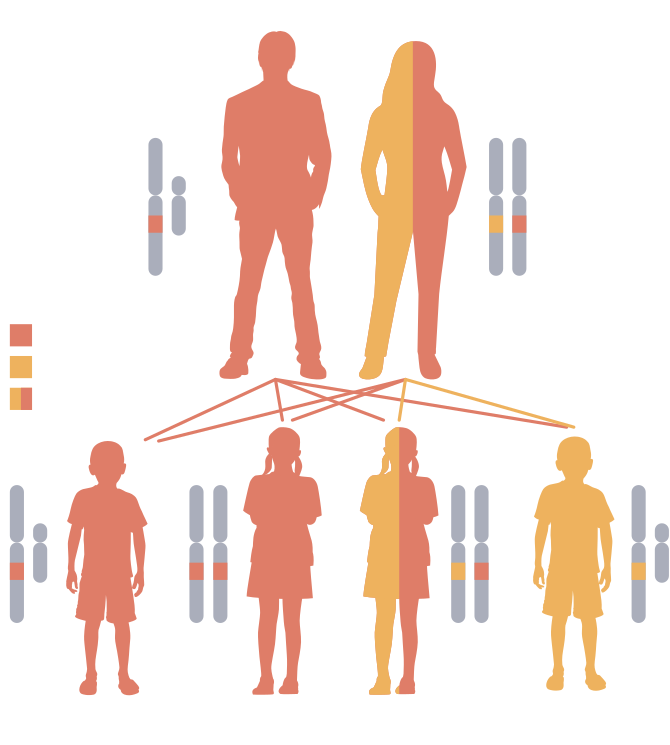
The PLP1 gene mutation is inherited in an X-linked pattern, which means the gene responsible for PMD is found on the X chromosome.
Boys have one X chromosome and one Y chromosome, while girls have two X chromosomes. Because boys only have one X chromosome, a single faulty gene can cause PMD.
However, if a girl inherits one faulty X chromosome, she still has a second, healthy X chromosome. That healthy X chromosome usually provides enough correct instructions for the body to function normally. She is considered an unaffected carrier: she has the gene that can cause PMD, but typically does not show symptoms of it.
A mother who carries the PMD gene may pass it on to her children. Each pregnancy carries:
- A chance that a son will be affected
- A chance that a daughter will be a carrier
Genetic counseling can help families better understand their individual risk.
How is PMD diagnosed?
PMD is usually diagnosed through a combination of medical assessments, including a child’s development, physical symptoms, and imaging such as an MRI (a scan of the brain).
A genetic test is often used to confirm the diagnosis by identifying changes in the gene linked to PMD.
For many families, getting a diagnosis can take time. If you’re going through this process, you’re not alone — and support is available along the way.


Types of PMD
PMD can present in different ways, and doctors often group it into types based on how early symptoms appear and how severe they are.
The types of PMD from most severe to least severe are:


Connatal means congenital or at birth, so the connatal type of PMD is observed very early in life. Symptoms begin in early infancy and may include significant difficulties with movement, feeding, and breathing. These children with PMD often require a high level of care.
Symptoms usually appear within the first year of life. These children with PMD may have difficulty coordinating movement (ataxia), involuntary muscle spasms (spasticity), leading to stiff and slow leg movements, delays in reaching developmental milestones (e.g. sitting, walking), loss of motor abilities later in life and progressive intellectual decline. Many continue to develop skills over time and live well into mid to late adulthood.
This is a milder form of PMD called by a different clinical name, SPG2, or hypomyelination of early myelinating structures (HEMS). SPG2 tends to appear later in childhood. It often involves stiffness and weakness in the legs, along with additional neurological symptoms such as involuntary eye movement and mild to moderate intellectual disability.
It is called “complicated” because it involves dysfunction of the autonomic nervous system (the part of the nervous system that controls internal body parts), such as poor bladder control. Individuals with this form of PMD typically have a normal lifespan.
This is the mildest type of PMD. It mainly affects movement, causing slowly progressive stiffness and weakness in the legs, and individuals may remain otherwise less affected.
PMD prevalence
PMD is estimated to affect
1 in 200,000
to
1 in 500,000
people.
Because of the way it is inherited, it mainly affects boys, although girls can be carriers and, in some cases, may experience mild symptoms.
PMD treatment
There is currently no cure for PMD, but there are ways to help manage symptoms and improve quality of life.
Treatment often focuses on supportive care, which may include:

Medications to help manage seizures

Support for muscle stiffness or tightness (spasticity)

Physical, occupational, and speech therapies

Support with feeding and nutrition
Care is usually tailored to each child’s needs, and many families work with a team of specialists over time.
Research is ongoing, and new approaches are being explored to better understand and treat PMD.
Living with PMD
Living with PMD comes with challenges, but families do not have to face them alone.
Whether you are newly diagnosed or have been navigating PMD for some time, support, guidance, and community can all make a meaningful difference.
Guide to being newly diagnosed with PMD Guide to living well with PMD

FAQs
Frequently asked questions about PMD
PMD affects each child differently, and the way it develops can vary. Some children may experience more significant challenges from early on, while others develop symptoms more gradually.
Although PMD is a lifelong condition, many children continue to grow, learn, and develop in their own way with the right support.
Yes! Many children with PMD do attend school, often with additional support tailored to their needs.
This might include physical support, communication aids, or specialized learning plans. With the right environment and understanding, school can be an important place for learning, social connection, and development.
Support is available, and reaching out can make a meaningful difference.
The PMD Foundation offers information, guidance, and a community of families who understand what you’re going through. Whether you’re looking for answers, practical advice, or simply someone to talk to, you don’t have to face this alone.
Guide to being newly diagnosed with PMD Join the PMD Family Network
PMD (Pelizaeus-Merzbacher Disease) and PMLD (Pelizaeus-Merzbacher-like Disease) are both rare conditions that affect how the brain and nerves develop, and they can look very similar in terms of symptoms.
The key difference is the underlying genetic cause. PMD is usually caused by a change in a specific gene called PLP1, while PMLD is caused by changes in different genes.
Although the names and symptoms may overlap, they are considered separate conditions. A genetic test can help doctors make an accurate diagnosis and guide the right care and support.


Help families affected by PMD & PMLD
Your support funds research, resources, and community programs that make a real difference in the lives of families navigating PMD and PMLD.